
Read the ring before changing your technique
Holding a Poké Ball reveals a colored circle around the Pokémon. Its color communicates catch difficulty, while its changing size gives you an aiming target. Nice, Great and Excellent bonuses reward landing inside that target at different sizes. The practical tradeoff is simple: a smaller target offers a better precision bonus but is harder to hit. Begin with a size you can reach regularly.
An Excellent Throw describes precision, not a guaranteed catch. An accurate ball can still break open. Judge whether you hit the intended spot before judging the result, so unlucky escapes do not convince you that a reliable motion is wrong.
Build one curveball motion you can repeat
Touch and hold the ball, move your finger in a small circular motion to spin it, then release with an upward swipe toward the Pokémon. The spin creates the curveball opportunity. Pick the direction that feels natural and keep it consistent while learning. There is no single screen coordinate that works for every phone, hand position and encounter distance.
Initially, aim for contact rather than an Excellent label. Observe the curve and shift your release point slightly if the ball repeatedly passes to one side. If it lands short, adjust the upward reach of your swipe. Keep the same grip between attempts so you can identify which adjustment helped.
Watch a full movement cycle
Pokémon may jump, move sideways or attack, and these motions can spoil an otherwise accurate throw. Before releasing, watch one complete movement cycle. Notice where the Pokémon settles and how long its attack animation lasts. The aim is to send the ball toward a predictable position when it can connect, rather than throwing immediately because the circle looks small.
Different Pokémon need different timing. A motion for a large, nearby target may fall short against a distant one. Treat an unfamiliar species as calibration. If it keeps knocking balls away, wait for a clearer opening. Change spin, swipe length or timing individually, so you can identify what fixed the problem.
Choose a ball and berry for the actual problem
Good technique and sensible items work together. Great Balls and Ultra Balls can improve catch chances compared with ordinary Poké Balls. Berries solve different problems, so select one according to what you want from the encounter. Recheck the active berry after an unsuccessful attempt rather than assuming it still applies.
For example, a Pokémon you can hit easily but badly want to catch suggests a different berry choice from one that constantly moves out of your aim. When Candy is your priority, accept that choosing a Candy-focused berry is a tradeoff. Do not spend scarce items on every practice encounter simply to make your accuracy statistics look better.
| Berry | What it helps with |
|---|---|
| Razz Berry / Golden Razz Berry | Improving the chance that the Pokémon stays caught; Golden Razz is stronger. |
| Nanab Berry | Slowing movement to make a restless target easier to handle. |
| Pinap Berry | More Candy if the catch attempt succeeds. |
| Silver Pinap Berry | Combining an improved catch chance with extra Candy. |
Use a short three-stage practice session
Practice briefly on common Pokémon. These stages are a suggested routine, not hidden game mechanics. Progress when each step becomes repeatable. A few focused encounters are more useful than many rushed throws.
Track a simple observation, such as how often your next ten throws touch the Pokémon. Then note how many hit your chosen circle. This separates basic accuracy from precision and helps you notice improvement even when catches remain random. Do not turn a missed Excellent attempt into an automatic reason to abandon a useful Great throw.
- Contact: keep your grip and spin direction steady, and aim to land the ball on the Pokémon.
- Control: choose a manageable Great-sized target and adjust your release point until the curve becomes predictable.
- Precision: try a smaller target on a species whose distance and movement you already understand.
Diagnose the miss instead of blaming the whole throw
A short ball suggests reviewing distance; a repeated sideways miss suggests reviewing aim and release; a deflected ball suggests reviewing the attack window. These are starting points for observation, not guaranteed diagnoses. Make the smallest useful adjustment, repeat it and watch whether the pattern changes. If your hand is tired or the screen is difficult to see, take a break.
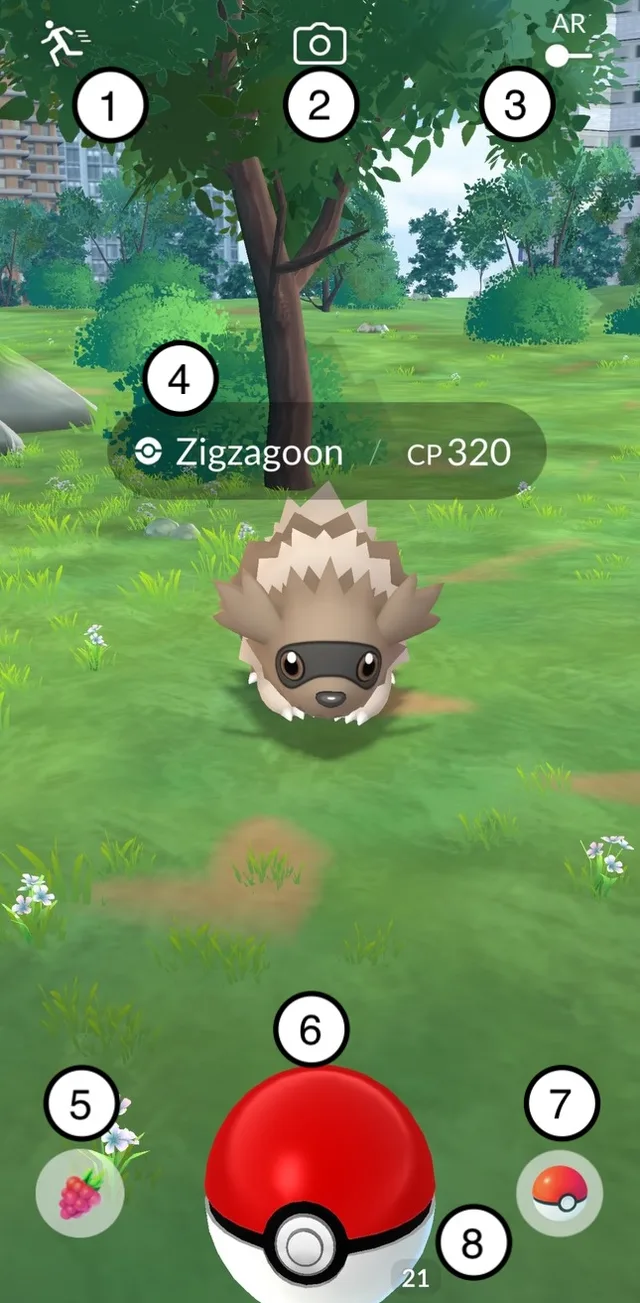
Use the same encounter view while practicing so your visual reference stays familiar. AR encounters add camera positioning and environmental awareness, which can be enjoyable but make an isolated aiming exercise more complicated. Choose a comfortable view and safe stationary position. Improve one skill at a time before adding movement or a new presentation mode.
Bring patience to the raid catch screen
After a successful raid, the reward encounter uses a limited supply of Premier Balls. This is where a familiar curveball rhythm pays off. Check your berry, observe the boss and commit to the target size you can hit. A calm Great curveball is a useful choice when an Excellent attempt would be a guess.
The official guidance recommends berries, accurate throws, curveballs and watching attack patterns. None makes every ordinary raid catch certain. If a boss escapes, review your decisions without assuming the entire raid was wasted: winning and catching are separate stages. Practice the motion on common encounters before asking your last Premier Ball to teach it to you.
Sources & further reading
- Finding and catching wild Pokémon
- Types of items and their effects
- Official tips for catching a Raid Boss
- Catching Pokémon in AR mode
Game details can change. Check the linked official sources and the current in-game information. Reviewed: Oct 4, 2026.